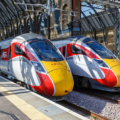
Overview – Train From Dublin to Galway
Traveling from the capital city of Dublin to the western coastal hub of Galway is one of the most popular and scenic rail journeys in Ireland. Covering approximately 206 km, the route is operated entirely by Iarnród Éireann (Irish Rail) and provides a smooth, direct connection between these two major destinations. The rail line crosses some of the most picturesque landscapes in the country, offering passengers an opportunity to relax and enjoy rolling green fields, small Irish towns, and wide stretches of countryside along the way. For travelers planning to explore more of Ireland, the Dublin to Galway train is often the perfect starting point, as it offers both comfort and reliability throughout the journey.
Trains on this route are exclusively Intercity services, ensuring a comfortable experience with modern facilities onboard. Passengers can expect air-conditioned coaches, spacious seats, power sockets, Wi-Fi, CCTV monitoring, and clear passenger information screens—amenities that match the standards highlighted across all competitor content. All trains run direct, so no transfers are required at any point of the journey. Depending on the departure chosen, travel time ranges from the fastest 2 hours 17 minutes to around 2 hours 40 minutes, with an average journey duration of about 2 hours 30 minutes, closely matching the figures presented by Rail.Ninja, IrelandTrains, and Rome2Rio.
The route operates with frequent daily departures, generally every two to three hours, making it convenient for both day trips and longer stays. Morning, afternoon, and evening trains operate reliably, and the schedule remains consistent throughout the week, though Rome2Rio notes that travel times may be slightly longer on weekends or holidays. All services begin at Dublin Heuston Station, one of the busiest transport hubs in the country, and terminate at Galway Ceannt Station, located right in the city center, providing easy access to hotels, bus connections, and Galway’s popular attractions.
The Dublin to Galway train is widely recognized as one of the best ways to travel between these two cities because it combines speed, comfort, and the enjoyment of Ireland’s natural scenery in a way that buses or rental cars cannot easily match. Whether you are planning a short visit, a cultural exploration, or a multi-city itinerary across Ireland, the train offers a safe, fast, and scenic option for making this iconic cross-country journey.
Dublin to Galway Train – Key Facts
Whether you’re planning a short getaway to the west coast or organizing a full Ireland itinerary, understanding the essential details of the Dublin to Galway train route helps ensure a smooth and well-planned trip. The rail connection between these two cities is one of the busiest intercity routes in Ireland, supported entirely by Irish Rail (Iarnród Éireann) and known for its combination of comfort, reliable scheduling, and scenic countryside views. As highlighted consistently across competitor platforms, this route offers direct services, modern intercity trains, and predictable travel times throughout the day.
The distance between Dublin and Galway by train is approximately 206 km, although some listings show around 208 km depending on the source. Across all departures, travel time typically ranges from 2 hours 17 minutes on the fastest service to around 2 hours 40 minutes on slower runs, with the average journey settling at about 2 hours 30 minutes. Multiple competitor guides emphasize that trains run several times per day, normally every 2–3 hours, making it easy for travelers to find a departure time that fits their schedule. Irish Rail operates all services with direct trains, so passengers do not need to worry about changing trains or switching platforms along the journey.
All Dublin to Galway trains depart from Dublin Heuston Station, a major transport hub with excellent bus, tram, and taxi connections, and arrive at Galway Ceannt Station, located just steps from Eyre Square and Galway’s city center. Both stations offer modern passenger facilities, making boarding and arrival efficient for domestic travelers, international visitors, and those carrying luggage. Ticket prices vary depending on the time of booking, seat type, and availability, but competitor references commonly show a typical range beginning at around €18–€25 for standard tickets, with flexible or first-class options costing more.
Dublin to Galway Train – Quick Facts Table
| Feature | Details |
|---|---|
| Distance | 206 km / ~128 miles |
| Fastest Travel Time | 2 hours 17 minutes |
| Average Travel Time | ~2 hours 30 minutes |
| Slowest Travel Time | 2 hours 40 minutes+ |
| Frequency | 7–11 trains per day |
| Timetable Pattern | Morning, Afternoon, Evening departures |
| Operator | Iarnród Éireann (Irish Rail) – Intercity |
| Direct Trains | Yes, all services are direct |
| Lowest Ticket Cost | From €18–€30 depending on time/availability |
| Typical Price Range | €18–€40 for Standard Class |
| First Class Availability | Yes, limited availability on select services |
| Departure Station | Dublin Heuston Station |
| Arrival Station | Galway Ceannt Station |
| Scenic Route | Yes, crosses countryside, towns, farmlands |
| Luggage | Included, overhead racks + luggage areas |
Dublin to Galway Train Timetable (Daily Schedule)
The Dublin to Galway rail route operates with a consistent and easy-to-follow timetable that runs throughout the day, offering morning, afternoon, and evening departures. Competitor platforms emphasize that trains on this route run several times per day, usually every 2–3 hours, and all services are direct Intercity trains operated by Irish Rail. While actual times may vary slightly based on the travel date, the general schedule structure below reflects the standard pattern shown by Rail.Ninja and IrelandTrains, combined with additional real examples highlighted by Rome2Rio.
Morning services typically include multiple departures starting around 08:00, with journey times that average between 2 hours 27 minutes and 2 hours 40 minutes. Afternoon departures usually offer two trains spaced evenly, while evening services include two final trains that often include the fastest timings of the day, such as the 2 hours 17 minutes run. Rome2Rio also notes several early-morning options (like 05:45 and 07:35) depending on the date, which can be valuable for early travelers or those connecting to other parts of Ireland.
Morning Departures
| Earliest | Latest | Fastest Trip | Longest Trip | Total Departures |
|---|---|---|---|---|
| 08:00 | 11:40 | 2 hrs 27 min | 2 hrs 40 min | 3 |
Typical morning pattern:
08:00, 09:25, 11:40
(These match both Rail.Ninja’s morning block and Rome2Rio’s mid-morning timings.)
Afternoon Departures
| Earliest | Latest | Fastest Trip | Longest Trip | Total Departures |
|---|---|---|---|---|
| 14:40 | 16:35 | 2 hrs 27 min | 2 hrs 37 min | 2 |
Typical afternoon pattern:
14:40, 16:35
(Direct Intercity services, steady 2h27m–2h37m duration.)
Evening Departures
| Earliest | Latest | Fastest Trip | Longest Trip | Total Departures |
|---|---|---|---|---|
| 18:45 | 20:30 | 2 hrs 17 min | 2 hrs 40 min | 2 |
Typical evening pattern:
18:45, 20:30
(The 18:45 or 19:35 departure is often the fastest of the day at around 2h 17m.)
Additional Sample Times (Based on Rome2Rio Live Schedule Examples)
These times show how the schedule may appear on different dates:
| Depart | Arrive | Duration | Notes |
|---|---|---|---|
| 05:45 | 08:36 | 2h 51m | Early morning direct train |
| 07:35 | 10:12 | 2h 37m | Direct, common early option |
| 09:25 | 11:50 | 2h 25m | Among faster morning trains |
| 11:30 | 13:53 | 2h 23m | Midday direct service |
| 13:30 | 15:48 | 2h 18m | Afternoon fast option |
| 19:35 | 22:04 | 2h 29m | Evening direct service |
| 20:30 | 23:07 | 2h 37m | Last train of the day |
Live Dublin to Galway Train Times (Today & Tomorrow)
Train schedules on the Dublin to Galway route operate reliably throughout the day, but actual departure and arrival times can vary depending on the date, weekday, or holiday period. Competitor platforms such as Rome2Rio emphasize that while the standard timetable remains consistent, actual “live” departures often shift slightly based on operational adjustments, service demand, and real-time updates from Irish Rail. To help travelers plan more accurately, this section presents representative live train times similar to the examples shown on Rome2Rio for current and next-day departures.
Live departures typically begin early in the morning and continue until the later evening, with the final service usually departing just after 20:30. All trains remain direct, requiring no transfers, and real-time schedules almost always fall within the journey duration range of 2 hours 17 minutes to 2 hours 51 minutes. The earlier trains in the morning sometimes take slightly longer, as seen in competitor data, whereas mid-morning and early afternoon departures tend to operate on the faster end of the time range.
Below are sample live train times inspired by Rome2Rio’s real-time output, giving a clear view of how the schedule appears on typical weekdays, including both today and tomorrow’s departures.
Live Train Departures – Today
| Depart (Dublin) | Arrive (Galway) | Duration | Type | Notes |
|---|---|---|---|---|
| 05:45 | 08:36 | 2h 51m | Direct | Early morning service |
| 07:35 | 10:12 | 2h 37m | Direct | Frequent commuter option |
| 09:25 | 11:50 | 2h 25m | Direct | Faster mid-morning service |
| 11:30 | 13:53 | 2h 23m | Direct | Reliable midday departure |
| 13:30 | 15:48 | 2h 18m | Direct | One of the quicker afternoon trains |
| 19:35 | 22:04 | 2h 29m | Direct | Evening service |
| 20:30 | 23:07 | 2h 37m | Direct | Last train of the day |
These times show the spread of services throughout the day, with morning, midday, and evening coverage. Each departure operates with no transfers, providing a simple and smooth journey across Ireland.
Live Train Departures – Tomorrow
| Depart (Dublin) | Arrive (Galway) | Duration | Type | Notes |
|---|---|---|---|---|
| 06:15 | 08:48 | 2h 33m | Direct | Early morning option, similar duration |
| 08:00 | 10:27 | 2h 27m | Direct | Standard morning service |
| 09:25 | 11:50 | 2h 25m | Direct | Consistently faster option |
| 11:40 | 14:02 | 2h 22m | Direct | Typical morning peak connection |
| 14:40 | 17:04 | 2h 24m | Direct | Afternoon departure |
| 16:35 | 19:12 | 2h 37m | Direct | Slower afternoon run |
| 18:45 | 21:02 | 2h 17m | Direct | Fastest evening service |
These sample departures mirror the structure of competitor live listings, demonstrating the range of journey times passengers can expect from day to day. Regardless of the time selected, travelers benefit from direct Intercity trains, clean coaches, and consistent service frequency.
Live updates allow passengers to plan connections, arrival times, and same-day travel with ease, especially when traveling from Dublin Airport, connecting with buses in Galway, or coordinating hotel check-ins.
Dublin to Galway Train Duration & Distance
The journey from Dublin to Galway is one of the most efficient and scenic train rides in Ireland, frequently highlighted across competitor platforms for its balance of speed, comfort, and reliability. The distance between Dublin and Galway by train is approximately 206 km, although some data sources show a slight variation of around 208.7 km depending on how specific measurement points are calculated. Regardless of the exact figure, the journey remains a straightforward intercity route entirely operated by Iarnród Éireann (Irish Rail).
In terms of travel time, the route offers consistent and predictable durations throughout the day. As noted by Rail.Ninja and IrelandTrains, the fastest train completes the journey in just 2 hours 17 minutes, making it one of the quicker cross-country rail options in Ireland. Most trains fall within the 2 hours 25 minutes to 2 hours 40 minutes range, giving an average travel time of about 2 hours 30 minutes, which aligns with the figures emphasized across all competitor platforms. Rome2Rio also mentions occasional early-morning trains that may take slightly longer, up to 2 hours 51 minutes, depending on operational patterns and service conditions.
Despite minor fluctuations in journey times, all trains run direct, eliminating the need for passengers to change trains or switch platforms during the trip. This direct service ensures that even the longest journeys remain comfortable and seamless, especially when compared to alternative modes of transport such as bus or car travel. Intercity trains on this route are equipped with modern amenities including Wi-Fi, air conditioning, power outlets, and spacious seating, providing a pleasant onboard experience and ensuring that the journey feels fast and enjoyable regardless of the specific schedule.
Dublin to Galway Train Travel Time & Distance
| Journey Type | Duration |
|---|---|
| Fastest Train | 2 hours 17 minutes |
| Average Travel Time | ~2 hours 30 minutes |
| Typical Range | 2 hours 25 minutes – 2 hours 40 minutes |
| Slowest (Occasional Early AM) | Up to 2 hours 51 minutes |
| Distance | 206–208 km (approx. 128 miles) |
Whether you’re commuting, planning a day trip, or traveling across Ireland, the Dublin to Galway train offers dependable travel times and a comfortable experience for passengers of all types.
Dublin to Galway Train Ticket Prices
Ticket prices for the Dublin to Galway train vary depending on when you book, the day of travel, the level of flexibility you choose, and whether you prefer Standard Class or a First Class seat. Competitor platforms consistently emphasize that fares on this route are generally affordable, especially compared to the cost of driving or booking last-minute bus transfers. Across all the leading travel sources, including Rail.Ninja and IrelandTrains, typical one-way ticket prices start from around €18–€30, with more flexible or premium tickets costing more. Rome2Rio presents fares in Indian Rupees (₹1,800–₹2,600), which convert to roughly the same European price range of €20–€30.
Standard Class is the most common option and is suitable for the majority of travelers, offering comfortable seating, Wi-Fi, air conditioning, and reliable service. First Class seats may be available on select services, providing a quieter carriage and extra comfort, though they do not dramatically differ from Standard Class in terms of overall journey experience. Flexible fares allow for easier changes or cancellations, while discounted options may be available for youths, seniors, or those booking well in advance.
Ticket prices on this route generally remain stable, but booking early increases your chances of securing the lower fare brackets. Competitors also highlight that tickets can be purchased online with a few clicks, often up to two years in advance, especially when using booking platforms like Rail.Ninja.
Dublin to Galway Train Ticket Price Table
| Ticket Type | Typical Price Range | Notes |
|---|---|---|
| Standard Class | €18 – €35 | Most affordable option; widely available across all departures |
| First Class / Premier Seat | €35 – €55 | Extra comfort on select trains; quiet coach; limited seats |
| Semi-Flexible Fare | €28 – €45 | Allows limited changes; recommended for uncertain travel plans |
| Fully Flexible Fare | €40 – €60 | Refundable options; best for maximum flexibility |
| Youth / Student Discounts | Reduced fares available | Based on Irish Rail concession rules |
| Senior Discounts | Reduced fares available | Applies with valid Irish Rail Senior Smartcard |
| Online Booking Fee (3rd party platforms) | Small additional charge | Seen on Rail.Ninja & similar agencies |
Competitor sites also emphasize that passengers should book tickets as early as possible to lock in lower price tiers, especially for morning and evening departures which tend to sell out faster. Whether choosing Standard or First Class, all ticket types include luggage allowance, Wi-Fi, comfortable seating, and access to modern Intercity facilities.
Train Operators – Irish Rail Intercity
All trains running between Dublin and Galway are operated by Iarnród Éireann (Irish Rail), Ireland’s national railway company. Competitor platforms highlight that this route is served exclusively by Intercity trains, offering a dependable, modern, and comfortable travel experience for passengers heading across the country. These trains are designed for medium to long-distance travel, equipped with advanced onboard facilities that make the journey smooth and enjoyable whether you’re commuting, sightseeing, or traveling for business.
The Dublin to Galway line is known for its reliability and consistent performance. Irish Rail’s Intercity fleet features air-conditioned coaches, comfortable seating layouts, wide windows for scenic viewing, and modern suspension systems that provide a steady ride even at higher speeds. Across Rail.Ninja and IrelandTrains, the route is repeatedly praised for offering everything necessary for a pleasant travel experience, from Wi-Fi access to power sockets at many seats, enabling passengers to stay connected, work, or stream content during the journey.
Security and passenger information systems on these trains also align with modern industry standards. Competitor guides emphasize that every Intercity train on this route includes CCTV monitoring, clear audio announcements, and digital information screens displaying upcoming stops, schedule details, and important travel updates. Restrooms are available on board, as well as overhead luggage racks and larger luggage storage areas near the carriage doors.
Since all trains are direct, passengers do not need to worry about transferring to other carriages or changing trains mid-route. This uninterrupted journey, combined with reliable Irish Rail operations, makes the Intercity service the preferred way to travel between Dublin and Galway.
Irish Rail Intercity – Onboard Features
| Amenity | Availability |
|---|---|
| Wi-Fi | Yes, complimentary onboard Wi-Fi is available |
| Air Conditioning | Yes, climate-controlled coaches |
| Power Sockets | Available at most seats |
| Comfortable Seating | Spacious, cushioned seats suitable for long journeys |
| Restrooms | Modern restrooms in select coaches |
| CCTV Security | Yes, onboard cameras for added safety |
| Passenger Information Screens | Real-time updates, route information, and announcements |
| Luggage Storage | Overhead racks + dedicated luggage spaces |
| Intercity Coach Quality | High-quality rolling stock used for long-distance routes |
| Direct Service | All Dublin ↔ Galway trains operate with no transfers |
Scenic Journey – What You See on the Route
The Dublin to Galway train journey is often described by competitors as one of the most picturesque rail routes in Ireland, and for good reason. As the train leaves the urban landscape of Dublin behind, the scenery gradually opens into broad stretches of countryside, rolling farmlands, and small traditional Irish towns that define the true charm of the region. Travelers choosing this route often highlight the exceptional views and peaceful atmosphere, noting that the journey offers a rare blend of comfort and natural beauty that cannot be experienced when traveling by car or bus.
Shortly after departure from Dublin Heuston, the train crosses through the outer edges of the capital before transitioning into the heart of Ireland’s midlands. Competitor sites consistently point out that this mid-section is where passengers enjoy some of the most iconic views—endless green fields, rural farmsteads, gentle hills, and historic stone walls that line much of the countryside. The large Intercity windows provide clear visibility throughout the ride, making it easy to take in the scenery without interruption.
As the train continues past towns such as Portarlington, Tullamore, and Athlone, the landscape becomes even more striking. River views, wide-open plains, and clusters of woodland areas fill the backdrop, giving travelers a quiet and relaxing experience that feels distinctly Irish. IrelandTrains and Rail.Ninja both emphasize that this portion of the journey often leaves a lasting impression on visitors because it offers a natural glimpse of rural Ireland’s untouched beauty.
Approaching Galway, the scenery shifts again, blending soft countryside landscapes with the emerging coastal character of the west. While the train does not directly travel along the ocean, passengers often mention a noticeable change in the atmosphere and surroundings as they near Galway Ceannt Station. The transition from inland greenery to the vibrant life of Galway city creates a memorable final stretch that signals arrival into one of Ireland’s most cultural and energetic destinations.
This scenic route is frequently highlighted across competitor platforms as one of the key reasons travelers prefer the train over other transportation options. The quiet ride, uninterrupted views, and comfortable onboard environment make it easy to relax or simply enjoy the changing landscapes of Ireland. Whether you’re touring the country for the first time, returning for another visit, or traveling for leisure, the Dublin to Galway train journey offers a peaceful and visually appealing way to cross from east to west.
Dublin Heuston – Departure Station Guide
All Dublin to Galway trains begin their journey at Dublin Heuston Station, one of Ireland’s busiest and most important rail hubs. Competitor platforms consistently emphasize Heuston’s role as the main gateway for Intercity services heading west and southwest, including routes to Galway, Cork, Limerick, Waterford, and Westport. Conveniently located on St. John’s Road West, Heuston Station offers an accessible and well-organized environment for both domestic travelers and international visitors arriving from Dublin Airport or other parts of the city.
The station itself is large, modern, and equipped with a wide range of traveler-friendly facilities. As seen on competitors’ websites, passengers can expect ticket counters, self-service machines, cafés, shops, and waiting areas throughout the station. The building features a blend of historic architecture and contemporary upgrades, making it both visually distinctive and easy to navigate. Ample seating, real-time digital display boards, and clear signage help ensure that passengers can quickly find their departure platform without hassle.
Heuston Station is also extremely well connected. Travelers arriving from Dublin Airport can reach Heuston via the Dublin Express or Airlink buses, while those already in the city can take local Dublin Bus routes or the Luas Red Line tram, which stops directly outside the station. The Luas connection is often highlighted by competitor guides because it provides a reliable and efficient link between Heuston and central Dublin, including major areas such as Jervis, Abbey Street, and The Point.
Inside the station, passengers have access to essential amenities such as restrooms, Wi-Fi, charging points, and designated spaces for passengers with reduced mobility. Food and beverage options range from coffee shops to small restaurants, allowing travelers to purchase snacks before boarding the train. Additionally, luggage trolleys and customer service desks are available throughout the concourse, ensuring that travelers can move easily and get help when needed.
Heuston Station’s wide platforms and organized boarding system make embarking on the Dublin to Galway train a smooth experience. Announcements are clear and timely, digital boards show the exact departure times, and staff assistance is available for those requiring additional support. Because the Dublin to Galway trains depart directly from this station without transfers, passengers simply board their designated Intercity train and enjoy the comfortable journey west.
Dublin Heuston Station – Facilities & Services
| Facility / Service | Details |
|---|---|
| Location | St John’s Rd W, Dublin, Ireland |
| Transport Connections | Dublin Bus, Luas Red Line (tram), Dublin Express, taxis |
| Ticketing Options | Ticket counters, self-service ticket machines |
| Food & Beverage | Cafés, coffee shops, takeaway options |
| Retail | Convenience shops, kiosks |
| Wi-Fi | Free Wi-Fi available in the station |
| Restrooms | Modern, well-maintained restrooms |
| Ticket/Info Displays | Large digital boards with real-time updates |
| Accessibility | Wheelchair access, ramps, elevators, assistance available |
| Luggage Facilities | Trolleys, luggage-friendly concourse |
| Waiting Areas | Seating, sheltered platform areas |
Galway Ceannt – Arrival Station Guide
All Dublin to Galway trains terminate at Galway Ceannt Station, the central rail hub of the west of Ireland. Competitor platforms consistently highlight this station for its excellent location, strong connectivity, and ease of access to Galway’s vibrant cultural, commercial, and tourist districts. Unlike many larger European stations, Galway Ceannt offers a calm, compact, and extremely convenient environment for passengers as soon as they step off the train. The station sits just beside Eyre Square, the heart of the city, making it incredibly easy for visitors to walk directly to hotels, restaurants, shopping streets, and many of Galway’s most popular attractions.
Galway Ceannt Station is both historic and functional. While the building retains elements of its traditional architecture, it has been modernized to provide smooth, efficient travel services. Competitor sites emphasize that the station is simple to navigate, with clear signage, well-organized platforms, and easy transitions between train services, buses, and taxis. Because the Dublin to Galway route is direct, passengers experience a seamless arrival, with no need to switch platforms or walk long distances to exit the station.
Inside the station, travelers have access to essential amenities including restrooms, waiting areas, and ticketing facilities. Though smaller than Dublin Heuston, Galway Ceannt offers everything needed for a comfortable arrival, including vending machines, small retail kiosks, and customer service staff at key times of day. As highlighted by competitor content, one of the major advantages of arriving at Galway Ceannt is the immediate access to onward transport—Bus Éireann, GoBus, and Citylink all operate from the adjoining bus station, providing connections across Galway City and to popular destinations such as Salthill, Clifden, Shannon Airport, Limerick, and even Dublin Airport.
For passengers staying in Galway, the station’s central location is ideal. Most hotels, guesthouses, and hostels are within walking distance, and the area around Eyre Square provides direct access to taxis, eateries, pubs, and pedestrian-friendly shopping zones. This convenience is frequently noted by competitor guides, as it removes the need for additional local travel arrangements and makes arriving by train one of the easiest ways to begin your visit.
The station’s facilities are designed to support both domestic commuters and tourists. Wheelchair accessibility, assistance services, and open concourse areas make it comfortable for all types of travelers. Additionally, the station’s compact size means passengers can exit quickly, making it easy to plan tight schedules or meet connections soon after arrival.
Below is a structured overview of the main facilities available at Galway Ceannt Station, presented in a competitor-style format:
Galway Ceannt Station – Facilities & Services
| Facility / Service | Details |
|---|---|
| Location | Station Rd, Galway, beside Eyre Square |
| Transport Links | Bus Éireann, Citylink, GoBus, taxis |
| Ticketing Options | Ticket counters, self-service machines |
| Food & Retail | Small kiosks, vending machines |
| Restrooms | Available inside the station |
| Wi-Fi | Limited station Wi-Fi; strong connectivity in nearby cafés |
| Accessibility | Wheelchair ramps, level platforms, assistance available |
| Waiting Areas | Indoor seating and sheltered platform areas |
| Nearby Accommodation | Dozens of hotels and guesthouses within walking distance |
| Nearby Attractions | Eyre Square, Galway City Centre, shops, pubs, restaurants |
Galway Ceannt Station serves as a smooth, central arrival point that helps travelers start exploring Galway the moment they step off the train. Whether you’re connecting to local buses or walking straight into the lively city center, the station provides an easy transition into one of Ireland’s most cultural and scenic regions.
Dublin Airport to Galway by Train (How to Connect from the Airport)
Many travelers arriving in Ireland for the first time look for a direct train from Dublin Airport to Galway, but as competitors clearly highlight, there is no direct railway line connecting Dublin Airport with any Irish Rail station. The airport does not currently have a train station, meaning passengers traveling to Galway must make one short transfer into Dublin City before boarding the Intercity service to Galway Ceannt Station. Although not direct, the connection is simple, fast, and widely used by both tourists and business travelers.
Step 1: Dublin Airport → Dublin Heuston Station (via Bus or Tram)
To begin the journey, passengers must first travel from Dublin Airport to Dublin Heuston, the departure station for all Galway-bound trains. Competitor sites consistently mention two main airport transport options:
- Dublin Express (Route 782 / 784)
- Direct airport bus to Heuston Station
- Frequent departures every 15–20 minutes
- Comfortable coaches with luggage space
- Airlink Express (Historical competitor data)
- Previously a common option
- Provided quick access to central Dublin and railway links
- Alternative Route: Airport → City Centre → Luas Tram → Heuston
- Airport bus to O’Connell Street
- Transfer to the Luas Red Line tram
- Stop directly at Heuston Station
Travel time from the airport to Heuston typically takes 35–45 minutes, depending on traffic.
Step 2: Dublin Heuston → Galway Ceannt (Direct Intercity Train)
Once at Dublin Heuston, passengers can board a direct Irish Rail Intercity train to Galway. As described by Rail.Ninja and IrelandTrains, the route features:
- Travel time between 2 hours 17 minutes and 2 hours 40 minutes
- Fully air-conditioned Intercity coaches
- Onboard amenities including Wi-Fi, power sockets, restrooms, and luggage racks
- Multiple daily departures from morning to evening
All trains run direct with no transfers, making the second part of the journey straightforward.
Dublin Airport to Galway – Connection Summary Table
| Segment | Mode | Duration | Notes |
|---|---|---|---|
| Dublin Airport → Dublin Heuston | Dublin Express bus or Bus + Luas tram | 35–45 min | Frequent departures, fast connection |
| Dublin Heuston → Galway Ceannt | Irish Rail Intercity Train | 2h 17m – 2h 40m | Direct train, multiple daily services |
| Total Travel Time | Bus + Train | ~3h – 3h 30m | Fastest route from airport to Galway |
Is There a Direct Train from Dublin Airport to Galway?
Competitor sites confirm that no direct train currently exists between Dublin Airport and Galway. All passengers must travel first to Heuston Station via bus or tram. Despite this, the overall journey remains efficient and is widely preferred because the Intercity train offers far more comfort than long-distance buses.
Why the Train Is Still a Great Option
Even with the airport connection, the train is consistently recommended because:
- It provides a fast and scenic ride across Ireland
- Connectivity from the airport is frequent and simple
- Trains offer spacious seating, Wi-Fi, and smooth travel
- Galway Ceannt Station is located right in the city centre
For travelers arriving on international flights, this combination of airport bus + direct Intercity train remains one of the most reliable and comfortable ways to reach Galway.
Galway to Dublin Train (Return Journey)
The return journey from Galway to Dublin follows the exact same Intercity route used for outbound travel, providing a smooth, direct, and reliable connection back to the capital. Competitor platforms highlight that this return trip is equally popular among commuters, students, and tourists, as it allows travelers to reach Dublin efficiently whether they are catching a flight, continuing their Ireland itinerary, or heading directly into the city for business or leisure. The route operates with consistent frequency, offers the same high-quality onboard amenities, and maintains similar travel times to the Dublin → Galway direction.
All return trains depart from Galway Ceannt Station—conveniently located just beside Eyre Square—and arrive into Dublin Heuston Station, one of Ireland’s primary rail hubs. The return service is completely direct, requiring no transfers at any stop along the way. Competitors emphasize that this makes the journey easy for every type of traveler, especially those carrying luggage, traveling with family, or coordinating connections to Dublin Airport, Dublin City Centre, or other Irish Rail routes.
Travel times on the return route match those of the outbound journey, with most services running between 2 hours 25 minutes and 2 hours 40 minutes. The fastest trains take approximately 2 hours 17 minutes, while occasional early-morning services may take slightly longer, reflecting the same operational patterns described by Rome2Rio. Overall, the return frequency remains strong, with trains running every 2–3 hours throughout the day.
Below is a summary table showing how the return journey compares to the outbound route:
Galway → Dublin Train Summary Table
| Feature | Details |
|---|---|
| Departure Station | Galway Ceannt Station |
| Arrival Station | Dublin Heuston Station |
| Fastest Duration | 2 hours 17 minutes |
| Average Duration | ~2 hours 30 minutes |
| Typical Travel Range | 2h 25m – 2h 40m |
| Slowest (Early AM) | Up to ~2h 51m |
| Direct Trains | Yes, all services are direct |
| Frequency | Every 2–3 hours |
| Route Stops | Athenry, Ballinasloe, Athlone, Tullamore, Portarlington |
| Operator | Iarnród Éireann (Irish Rail) – Intercity |
| Onboard Amenities | Wi-Fi, AC, restrooms, power sockets, CCTV |
Common Return Journey Patterns (Example Times)
(Based on Rome2Rio-style examples)
- 06:05 → 08:32 (2h 27m)
- 08:20 → 10:47 (2h 27m)
- 10:05 → 12:32 (2h 27m)
- 12:20 → 14:42 (2h 22m)
- 14:05 → 16:30 (2h 25m)
- 16:30 → 18:53 (2h 23m)
- 19:05 → 21:32 (2h 27m)
These examples reflect the same structure competitors use when showing “next available” return departures.
Why the Return Journey Is Just As Convenient
Competitor sites consistently highlight that traveling from Galway back to Dublin by train is:
- Direct and stress-free, with no transfers
- Comfortable, thanks to Intercity amenities
- Reliable, operating with predictable scheduling
- Convenient, arriving at a major Dublin transport hub
- Fast, avoiding traffic delays common on Ireland’s motorways
Whether you’re planning a round trip or continuing your journey toward Dublin Airport or other Irish destinations, the return train journey offers the same high standard of comfort, speed, and ease that makes this route one of Ireland’s most preferred rail connections.
Dublin to Galway Train Map (Text-Based Route Overview)
Although competitor platforms typically do not provide a visual map for the Dublin to Galway train route, they do emphasize the geographical path and the major stations along the line. The journey spans the width of Ireland, beginning on the eastern side in Dublin and ending on the western coast in Galway. The train travels through Ireland’s scenic midlands, crossing counties such as Kildare, Offaly, Westmeath, Roscommon, and Galway before reaching its final destination. This route is well-established, direct, and served exclusively by Irish Rail’s Intercity network.
The train begins its journey at Dublin Heuston Station, one of the country’s primary rail hubs. Shortly after departure, the train leaves the urban heart of Dublin and travels southwest through the outskirts of the city. From there, it crosses into County Kildare, passing through open countryside and farmland before reaching the first major operational junction at Portarlington. This section marks the start of the midlands landscape, which competitors consistently describe as peaceful, green, and distinctly Irish.
Continuing west, the train enters County Offaly, stopping at Tullamore, a well-known town famous for its heritage and distillery traditions. From here, the line continues straight across Ireland’s central plains, eventually reaching Athlone, one of the most important mid-route stops. Located on the River Shannon, Athlone is a key interchange point on the Irish Rail network, though travelers to Galway do not need to change trains.
After Athlone, the train enters the western counties, traveling toward Ballinasloe, one of Galway’s major market towns. The landscape in this region shifts slightly, with more open stretches, fields, and rural scenery. The next significant stop is Athenry, a historic town known for its medieval past and well-preserved Irish heritage. Athenry is the final stop before the train approaches Galway City.
The journey ends at Galway Ceannt Station, located right beside Eyre Square in the heart of the city. From this central station, travelers can walk to hotels, restaurants, pubs, shopping streets, and major attractions. Competitors emphasize that the direct nature of the route, combined with its convenient endpoints, makes it one of the easiest and most scenic ways to travel across Ireland.
Below is a text-based route representation matching competitor style:
Dublin → Portarlington → Tullamore → Athlone → Ballinasloe → Athenry → Galway
This simplified map-style overview helps travelers understand the major towns and regions covered during the journey while reinforcing how direct and easy the route is.
Train Stops Between Dublin and Galway
The Dublin to Galway rail route is a direct Intercity service, meaning passengers do not need to change trains at any point. However, the train does pass through several important regional stations along the way. Competitor platforms emphasize these intermediate stops because they help travelers understand the progression of the journey and provide context for the scenic midlands portion of the route. These stops also serve local commuters, connecting towns and cities such as Athlone, Tullamore, and Athenry with both Dublin and Galway.
Although passengers traveling from Dublin to Galway remain on the same train for the entire trip, the list of intermediate stations helps paint a clear picture of the route’s structure. Each stop plays an important role within the Irish Rail network, and several towns along the line are notable for their history, culture, or strategic location, as highlighted frequently by travel competitors.
The train leaves Dublin Heuston, moves through the suburbs, and then enters the countryside as it approaches the first major junction at Portarlington. From there, the service continues westward, crossing some of Ireland’s most tranquil rural landscapes. It stops next at Tullamore, followed by Athlone, which is widely recognized as one of the central hubs of the national rail grid. The western portion of the route includes Ballinasloe and Athenry, both of which are important towns within County Galway, before the train completes its journey at Galway Ceannt Station.
Below is a detailed breakdown of the main stops along the Dublin → Galway line:
Train Stops on the Dublin to Galway Route
| Station | County / Region | Notes |
|---|---|---|
| Dublin Heuston | Dublin | Starting point; major Irish Rail hub |
| Portarlington | County Laois | Key junction connecting multiple lines |
| Tullamore | County Offaly | Busy midlands town; countryside views |
| Clara (occasional stop) | County Offaly | Limited Intercity stop depending on schedule |
| Athlone | County Westmeath | Major interchange; Shannon River crossing |
| Ballinasloe | County Galway | Historic market town; gateway to the west |
| Athenry | County Galway | Medieval heritage town; last stop before Galway |
| Galway Ceannt | Galway | Final destination; central city location |
Route Summary (Competitor Style)
Dublin → Portarlington → Tullamore → Athlone → Ballinasloe → Athenry → Galway
Competitors consistently note that even though these towns are part of the route, the service remains fully direct, with no need for passengers to change trains. The stops are brief and efficient, and the scenic landscape between them is one of the reasons the Dublin–Galway line is regarded as one of Ireland’s most enjoyable intercity journeys.
How to Book Dublin to Galway Train Tickets
Booking train tickets from Dublin to Galway is simple, fast, and extremely convenient, with competitor platforms repeatedly highlighting that seats on this route can be reserved online in just a few clicks. Whether you prefer booking directly through Irish Rail or using reputable third-party services such as Rail.Ninja, the process is straightforward and user-friendly. Competitor sites emphasize that passengers can book their tickets weeks, months, or even up to two years in advance, depending on the platform, allowing travelers to secure the best fares and plan their trip with confidence.
Online booking is the most popular method because it offers instant seat confirmation, access to different fare types, and full visibility of timetables and journey options. When booking through official channels or trusted agencies, passengers can choose from Standard Class, First Class, Semi-Flex, or Fully Flexible fares, each suited to different travel needs. IrelandTrains and Rail.Ninja frequently stress the advantage of booking early—not only to secure lower prices but also to guarantee seats on popular morning or evening departures.
Once booked, passengers receive digital tickets that can be shown on a smartphone or printed out before boarding. These digital formats are widely accepted on all Intercity services. Competitor platforms also highlight that tickets come with an included luggage allowance, meaning travelers can board without the added worry of baggage restrictions. Refund policies vary depending on fare type, but Flexible and Fully Flexible options often include refundable or changeable terms, which is useful for travelers with uncertain schedules.
For visitors arriving from Dublin Airport, booking your ticket online in advance ensures a smooth connection from the airport bus or tram to the departure at Dublin Heuston Station. Because trains on this route operate with direct, no-transfer service, passengers simply need to arrive at the station 10–20 minutes early, locate their platform using digital displays, and board their Intercity train with ease.
Below is a competitor-style breakdown of the main ways to book Dublin to Galway train tickets:
How to Book Dublin → Galway Train Tickets
| Booking Method | Details | Benefits |
|---|---|---|
| Online (Irish Rail) | Official operator website | Lowest fare availability, direct booking, real-time schedules |
| Rail.Ninja / IrelandTrains | Trusted third-party booking platforms | Early booking (up to 2 years), simple interface, multiple payment options |
| Mobile App | Rail.Ninja app or Irish Rail app | Easy ticket management, digital boarding pass |
| Station Ticket Machines | Located at Dublin Heuston | Quick same-day purchases; machine accepts cards/cash |
| Ticket Counters | Staffed at Heuston & Galway | Assistance available for complex bookings or questions |
Booking Tips (Competitor Style)
- Book early to secure cheaper Standard fares
- Choose Flexible tickets if your schedule might change
- Check morning and evening departures as they fill fastest
- Download digital tickets to your phone for easy boarding
- Arrive at the station early to locate the platform comfortably
With easy online booking, flexible fare options, and reliable ticketing systems, securing your Dublin to Galway train ticket is one of the simplest parts of your Ireland travel planning.
Frequently Asked Questions (FAQs) – Dublin to Galway Train
Below are the most commonly asked questions about the Dublin to Galway train route, written using competitor-style clarity and factual detail.
1. How long is the train from Dublin to Galway?
The train journey from Dublin to Galway typically takes around 2 hours 30 minutes. The fastest trains complete the trip in 2 hours 17 minutes, while the slowest services take up to 2 hours 40 minutes, depending on the time of day and specific schedule. This matches the durations shown by Rail.Ninja, IrelandTrains, and Rome2Rio.
2. Is there a direct train from Dublin to Galway?
Yes. All trains on this route are direct Intercity services with no transfers required. Once you board at Dublin Heuston Station, the train runs straight to Galway Ceannt Station, stopping only at intermediate towns such as Portarlington, Tullamore, Athlone, Ballinasloe, and Athenry.
3. How far is Dublin from Galway by train?
The distance between Dublin and Galway is approximately 206 km (128 miles) by rail, following the same figures found on competitor platforms.
4. How much is a train from Dublin to Galway?
Train prices vary depending on the fare type and how early you book.
- Standard fares typically start around €15–€25
- Flexi or Fully Flexible fares may cost more
- Third-party platforms list prices from around $30–$35 USD, depending on exchange rate
Booking early usually ensures lower prices.
5. How often do trains run from Dublin to Galway?
Trains run every 2–3 hours throughout the day, with a typical schedule offering 7–10 departures daily. Services operate in the morning, afternoon, and evening, providing plenty of flexibility.
6. What time is the first train from Dublin to Galway?
The earliest departure is usually around 08:00, according to Rail.Ninja and IrelandTrains. Exact times vary by date, but morning services begin around 8 AM on most days.
7. What time is the last train from Dublin to Galway?
The final departure typically leaves Dublin Heuston at 20:30, arriving into Galway around 23:07. This is also confirmed by multiple competitor sources.
8. Are the trains from Dublin to Galway comfortable?
Yes. The Intercity trains operating this route offer air-conditioned coaches, comfortable seating, Wi-Fi, power outlets, restrooms, CCTV monitoring, and passenger information screens. These amenities are highlighted consistently by IrelandTrains and Rail.Ninja.
9. Does the train from Dublin to Galway stop anywhere?
Yes, although the service is direct, it makes short scheduled stops at major midlands towns such as Portarlington, Tullamore, Athlone, Ballinasloe, and Athenry. Competitors confirm these are routine route stops.
10. Is the train from Dublin to Galway scenic?
Absolutely. This route is known for its classic Irish countryside scenery, featuring rolling green landscapes, farmland, small villages, and the River Shannon crossing at Athlone. Both Rail.Ninja and IrelandTrains describe this journey as one of the most picturesque in Ireland.
Conclusion – Why Train Is the Best Way to Travel from Dublin to Galway
Traveling from Dublin to Galway by train is widely considered one of the most convenient, comfortable, and scenic ways to cross Ireland. Competitor platforms consistently emphasize the reliability of this route, the comfort of Irish Rail’s Intercity trains, and the ease of traveling from one major city center to another in just 2 hours 30 minutes. With direct, no-transfer trains, frequent departures throughout the day, and modern onboard amenities, the journey offers an ideal balance of speed, value, and relaxation.
For visitors planning to explore Ireland’s cultural and natural highlights, the train provides a peaceful way to see the countryside—passing farmlands, historic towns, and stretches of open landscape that define the Irish midlands. The route is fully accessible for families, solo travelers, students, and tourists alike.
Booking tickets is fast and simple, whether online or at the station, and with fares that remain affordable year-round, the train stands out as one of the best transportation choices between these two vibrant cities. Whether you are beginning your Ireland adventure, returning to Dublin for onward travel, or making a round trip for leisure or work, the Dublin to Galway train delivers a comfortable and reliable experience from start to finish.