Introduction — Train Travel From Milan to Venice
Traveling from Milan to Venice by train is one of the most convenient, comfortable, and visually memorable journeys you can take in Italy. Whether you’re planning a day trip, connecting between cities, or exploring Italy’s most iconic destinations, this route offers an easy and stress-free way to reach Venice without dealing with motorway traffic, high toll roads, or complicated parking in the lagoon city. With frequent departures throughout the day, direct services, and journey times as fast as 2 hours, the train remains the most popular choice for thousands of travelers moving between these two major Italian hubs.
Both Frecciarossa and Italo operate high-speed trains on this route, offering fast travel times, modern interiors, and a comfortable onboard atmosphere. Many trains take just 2h–2h15m, while slower Regionale options provide a more budget-friendly alternative if you don’t mind longer travel times. As soon as you board at Milan Centrale or Milan Rogoredo, you can simply relax in your seat, enjoy free Wi-Fi on most high-speed services, and prepare for a smooth ride across northern Italy.
The journey also offers a few scenic highlights worth knowing about. If you sit on the left-hand side, you’ll get brief but lovely glimpses of Lake Garda near Peschiera del Garda, with blue waters and terracotta rooftops peeking through. The most unforgettable moment comes at the end: crossing the Ponte della Libertà into Venice. As the train glides across this thin strip of land surrounded by water, the Venetian Lagoon opens up around you, creating a dramatic and beautiful approach to Venezia Santa Lucia Station—right in front of the Grand Canal.
Fast, reliable, and scenic, the train from Milan to Venice is the easiest way to arrive right in the heart of one of the world’s most extraordinary cities.
Quick Route Overview
Traveling from Milan to Venice by train is straightforward, with high-speed and regional services running frequently throughout the day. Most trains depart from Milan Centrale, although some services also leave from Milan Rogoredo, and arrive at either Venezia Mestre (mainland) or Venezia Santa Lucia (historic island, right on the Grand Canal). Journey times vary by operator, with the fastest high-speed trains taking just 2 hours, making this one of the quickest ways to travel between the two cities.
You can choose between Frecciarossa, Italo, and Trenitalia regional services, depending on your budget and preferred travel style. High-speed trains offer modern interiors, free Wi-Fi, power outlets, and multiple class options, while regional trains provide the cheapest fares but take longer. Trains run throughout the day, starting early in the morning and continuing until late evening, making it easy to find a departure time that fits your itinerary.
Here’s a quick overview of everything you need to know:
🚄 Milan → Venice: Quick Route Summary
| Category | Details |
|---|---|
| Fastest Journey Time | 2 hours (Frecciarossa / Italo) |
| Average Journey Time | 2h 20m – 3h 10m |
| Distance | 243 km (152 miles) |
| Departures Per Day | 30–36 trains daily |
| First Train | Around 06:15 |
| Last Train | Around 22:30 |
| Departure Stations | Milan Centrale, Milan Rogoredo |
| Arrival Stations | Venezia Mestre, Venezia Santa Lucia |
| Direct Trains Available? | Yes — many daily |
| Ticket Prices | From €14.90 (advance) |
| Train Operators | Frecciarossa, Italo, Trenitalia |
This quick snapshot gives you a clear idea of what to expect on the route. Fast, frequent, and flexible, the trains from Milan to Venice make it simple to plan your trip—whether you’re traveling for leisure, business, or a day trip to discover the canals and historic charm of Venice.
Train Schedule: Milan → Venice
When you travel from Milan to Venice by train, you’ll find regular departures throughout the day, covering early morning, midday and late afternoon services. While schedules vary slightly by season and operator, here’s what typical frequency looks like:
- The first departures begin early in the morning (≈ 06 :15) from Milan Centrale or Milan Rogoredo.
- Services continue hourly during the day — and every ~20–30 minutes in peak hours.
- Many of the fastest direct services (e.g., on the high-speed lines) arrive in Venice in around 2h–2h30m.
- The last trains depart in the evening (often around 20:45–22:30) depending on the day and season.
Train Schedule Table — Milan to Venice
| Departure Time | Departure Station | Arrival Station | Duration | Transfers | Notes |
|---|---|---|---|---|---|
| 06:15 | Milan Centrale | Venezia Santa Lucia | ~2h00 | 0 | High-speed direct |
| 09:45 | Milan Centrale | Venezia Mestre | ~2h17 | 0 | Italo direct |
| 12:45 | Milan Centrale | Venezia Santa Lucia | ~2h27 | 0 | Frecciarossa high-speed |
| 15:45 | Milan Centrale | Venezia Mestre | ~2h15 | 0 | Direct service |
| 18:25 | Milan Centrale | Venezia Santa Lucia | ~3h12 | 1 | Regional slower option |
| 20:45 | Milan Rogoredo | Venezia Santa Lucia | ~2h30 | 0 | Evening direct |
Times are representative and might vary by date and operator — always check live timetables before booking.
Duration & Distance Explained
The train from Milan to Venice is one of Italy’s most efficient city-to-city connections, offering a smooth, comfortable, and time-saving experience. Journey times vary depending on the type of train you choose—high-speed services offer the fastest travel, while regional trains take longer but provide the most budget-friendly fares.
The total distance between Milan and Venice is 243 km (152 miles), and high-speed trains cover this route impressively fast. On the fastest Frecciarossa or Italo services, the journey can be as short as 2 hours, making it significantly quicker than driving the same distance, which can often take over three hours due to traffic and limited parking options in Venice.
Regional trains and slower intercity services typically take 3 to 4 hours, stopping at more stations along the way. These trains are ideal for travelers who prefer cheaper fares and don’t mind longer travel times. No matter which type of train you choose, the final stretch across the Ponte della Libertà into Venice offers a dramatic approach over the lagoon, one of the most unforgettable parts of the journey.
Overall, the route offers an excellent balance of speed, comfort, and flexibility — making train travel the easiest and most reliable way to get from Milan to Venice.
🚄 Milan → Venice: Duration & Distance Overview
| Category | Details |
|---|---|
| Total Distance | 243 km (152 miles) |
| Fastest Journey Time | 2h 00m (Frecciarossa / Italo) |
| Typical High-Speed Duration | 2h 10m – 2h 30m |
| Average Journey Time | 2h 45m – 3h 10m |
| Slowest / Regional Duration | 3h 30m – 4h 00m |
| Direct Trains Available? | Yes — many daily |
| Scenic Highlights | Lake Garda (left side), Venetian Lagoon crossing |
High-speed trains make this route particularly appealing for day-trippers, commuters, and long-distance travelers. With frequent departures, fast travel times, and easy station access in both cities, the Milan to Venice train remains the most convenient and time-efficient option.
Train Ticket Prices: Milan → Venice
Ticket prices for the train from Milan to Venice vary depending on the operator, travel class, and how far in advance you book. If you book early and are flexible with your departure time, you can often find advance fares from around €14.90 for Standard Class on many high-speed or Intercity services. Buying your train ticket from Milan to Venice on the day of travel is usually more expensive, especially on popular morning and evening departures.
High-speed operators like Frecciarossa and Italo generally cost more than regional services, but they offer faster journey times and additional comfort. Regional trains are usually the cheapest train from Milan to Venice, with simple Standard Class seating and longer travel times, making them ideal for budget-conscious travelers who don’t mind a slower ride.
Below is an overview of typical ticket price ranges, based on the patterns shown by major booking platforms.
5.1 Typical One-Way Ticket Prices by Operator
| Operator | Ticket Type | From (Advance) | Typical Range (Standard) | Notes |
|---|---|---|---|---|
| Frecciarossa | Super Economy / Promo | from €14.90–€19.90 | about €25–€55 | Fastest high-speed, multiple classes, welcome service in higher classes |
| Italo | Low-cost / Promo | from €14.90–€19.90 | about €24–€50 | High-speed, competitive fares, several comfort levels |
| Trenitalia Regionale | Base (2nd Class) | from €9–€15 | about €10–€25 | Slowest but often the cheapest train from Milan to Venice |
Prices are indicative and can change depending on date, time, and demand. Booking in advance usually gives you the best deals for train tickets from Milan to Venice.
5.2 Prices by Travel Class (High-Speed Trains)
On high-speed trains like Frecciarossa and Italo, you can choose different classes with increasing comfort and services. Here’s how train ticket prices from Milan to Venice typically scale by class:
| Class | Example Onboard Experience | Typical One-Way Range |
|---|---|---|
| Standard / Smart | Comfortable seats, Wi-Fi on most trains, power sockets | €14.90–€35 |
| Premium | More space, welcome drink and snack on some Frecciarossa services | €25–€45 |
| Business / Prima | Wider seats, quieter environment, snacks and drinks included | €35–€60+ |
| Executive / Club / Lounge-style | Very spacious seating, lounge access at major stations, at-seat meals | €60–€90+ |
If you’re happy with Standard Class, you’ll usually find the best value for money, especially if you secure a Super Economy or promo fare in advance. Travelers who want more comfort, extra legroom or onboard catering can upgrade to Premium, Business or Executive, particularly on longer travel days or when combining several routes.
5.3 Price Differences by Booking Time
Booking timing has a big impact on the cost of train tickets from Milan to Venice:
| When You Book | Price Expectation | Notes |
|---|---|---|
| 2–3 months in advance | From €14.90–€20 (Standard) | Best chance for Super Economy / promo fares |
| A few weeks in advance | Around €20–€35 | Good mix of cheaper and mid-range options |
| 1–2 days before departure | Often €30–€50+ | Fewer discounts left, especially in peak times |
| On the day of travel | Can rise to €40–€60+ on busy trains | Highest prices, especially in mornings/evenings |
To keep your train ticket from Milan to Venice as affordable as possible, it’s worth:
- Checking prices as early as possible
- Being flexible with departure time (avoiding peak commuter hours)
- Considering regional trains if you want the cheapest train tickets from Milan to Venice, and don’t mind longer journey times
Overall, the cost of the train from Milan to Venice can be very reasonable if you book ahead and choose the right combination of operator and class. High-speed trains offer the best balance of speed and comfort, while regional trains provide the lowest base prices for travelers on a tighter budget.
How to Find Cheap Tickets
Finding cheap train tickets from Milan to Venice is easier when you know how pricing works in Italy. Fares on Frecciarossa, Italo, and Regionale services fluctuate based on demand, booking date, travel time, and ticket type. By planning ahead and using a few expert strategies, you can often secure fares starting from €14.90—sometimes even lower on regional trains.
Below are the best, practical, competitor-style strategies to save money on this route:
1. Book in Advance for the Lowest Fares
High-speed operators like Frecciarossa and Italo release their cheapest tickets several months ahead.
- “Super Economy” (Frecciarossa) and “Low Cost / Promo” (Italo) fares are the cheapest.
- They can sell out quickly on popular days (Fridays, Mondays, and holidays).
- Booking 1–3 months early gives you the highest chance of finding €14.90–€20 tickets.
Trainline also notes that buying on the day is often much more expensive, especially for morning departures.
2. Travel Outside Peak Hours
Peak commuter hours (around 06:00–10:00 and 15:00–19:00) usually have higher prices.
If you can, travel:
- Late morning
- Midday
- Early afternoon
- Late evening
These “off-peak” trains typically offer cheaper fares and more seat availability.
3. Check Both Milan Stations (Centrale + Rogoredo)
Some cheaper fares appear only from Milan Rogoredo, especially from Italo.
Always search both stations — the price difference can be meaningful, especially on promo fares.
4. Choose a Slower or Connecting Train
If you’re not in a rush, consider:
- A Regionale train
- A slower Intercity train
- A high-speed train with one connection
These services take longer but can cost significantly less, making them ideal for budget travelers.
5. Use Rail Passes If Traveling Across Italy
If your trip includes multiple long-distance routes (e.g., Milan → Venice → Florence → Rome), a pass may save you money.
- Eurail Italy Pass (for non-EU residents)
- Interrail Italy Pass (for EU residents)
These passes let you take multiple trains at flexible times and can reduce per-journey costs.
6. Watch for Italo and Trenitalia Seasonal Sales
Sales appear throughout the year, often offering:
- Up to 40–60% off on Frecciarossa
- Big weekend discounts (A/R Weekend, Speciale 2×1)
- Family/group promotions (Insieme, Bimbi Gratis)
These promotions come and go, so checking frequently is key.
7. Avoid Buying at the Last Minute
Competitor data clearly shows:
- Buying on the day can cost double or more compared to advance fares
- Popular morning departures often have the highest prices
- Evening trains sometimes still have promo fares available—but not always
If you’re budget-conscious, avoid “walk-up” purchases.
8. Compare Both Operators (Italo + Frecciarossa)
Italo and Frecciarossa compete aggressively on pricing.
- Sometimes Italo has cheaper promo fares
- Other times Frecciarossa offers special discounts on Premium or Business
Checking both operators almost always results in a better deal.
9. Be Flexible With Class Options
Sometimes higher classes like Premium (Frecciarossa) or Prima (Italo) drop to Standard-level prices during promotions.
You may get:
- Extra legroom
- Welcome drinks and snacks
- Wider seats
- Lounge access (in certain classes)
Always check pricing for all classes before booking—you may get an upgrade for just a few euros more.
10. Use Price Calendars & Alerts
Platforms like Trainline and Omio offer tools that help you:
- View the cheapest day to travel
- Track price changes
- Receive alerts when fares drop
This is especially useful for travelers planning multi-city itineraries.
Summary: How to Get the Cheapest Milan → Venice Train Tickets
| Savings Method | Expected Benefit |
|---|---|
| Book 1–3 months early | Lowest fares (€14.90–€20) |
| Travel off-peak | Better availability + lower prices |
| Compare both operators | Frequent price differences |
| Choose slower/connecting trains | Cheapest option overall |
| Watch sales | Up to 60% off |
| Consider passes | Great for multi-city trips |
| Avoid buying same day | Prevent highest fare tiers |
Train Types Explained: High-Speed vs Regional
Traveling from Milan to Venice by train gives you several options, each offering different speeds, comfort levels, and price ranges. The main operators on this route—Frecciarossa, Italo, and Trenitalia Regionale—provide a mix of high-speed and regional services.
If you want the fastest train from Milan to Venice, choose a Frecciarossa or Italo high-speed service, which can complete the journey in as little as 2 hours. These trains offer modern interiors, free Wi-Fi on most services, comfortable seats, and multiple class upgrades.
For travelers who want the cheapest train, Trenitalia’s Regionale trains are the most budget-friendly, though they take longer and offer fewer onboard amenities. They’re ideal for flexible travelers who don’t mind a slower pace and basic seating.
Below is a detailed breakdown of each train type to help you choose the best option for your trip.
🚄 Train Types from Milan to Venice: High-Speed vs Regional
| Train Type | Operators | Journey Time | Comfort Level | Wi-Fi & Power | Ticket Price Range | Best For |
|---|---|---|---|---|---|---|
| High-Speed (Frecciarossa) | Trenitalia | 2h–2h20m | ⭐⭐⭐⭐⭐ Modern, spacious, several classes | ✔ Wi-Fi, ✔ power sockets | €14.90–€55+ | Fastest travel, comfort, business trips |
| High-Speed (Italo) | Italo | 2h–2h25m | ⭐⭐⭐⭐⭐ Sleek interiors, quiet ride | ✔ Wi-Fi, ✔ power sockets | €14.90–€50+ | Budget-friendly high-speed, comfort |
| Intercity / Frecciabianca (limited) | Trenitalia | 2h50m–3h30m | ⭐⭐⭐ Basic, reserved seating | Limited availability | €12–€35 | Mid-range option when high-speed prices surge |
| Regionale (Regional) | Trenitalia Regionale | 3h30m–4h+ | ⭐⭐ Simple seating, basic service | ✘ Wi-Fi, ✘ power | €9–€25 | Cheapest fares, flexible travelers |
High-Speed Trains (Frecciarossa & Italo)
These are the most popular trains for traveling from Milan to Venice.
Advantages:
- Fastest journey times
- Multiple comfort levels (Standard, Premium, Business, Executive)
- Free Wi-Fi on most trains
- Air-conditioning, power sockets, and quiet cars
- Smooth, quiet ride with fewer stops
High-speed trains also provide the most scenic arrival into Venezia Santa Lucia, especially when crossing the lagoon.
Regional Trains (Regionale)
Regional trains offer the cheapest way to travel between the two cities but take the longest.
Advantages:
- Lowest ticket prices
- Good for last-minute travel
- No dynamic pricing on most regional fares
Limitations: - No Wi-Fi
- No power outlets
- No reserved seats on most services
- More stops → longer journey times
These trains are ideal if you are budget-focused and don’t mind extra travel time.
Which Train Type Should You Choose?
- Choose Frecciarossa or Italo if you want the best experience + fastest travel.
- Choose Intercity/Frecciabianca if high-speed fares are high and you still want a mid-range option.
- Choose Regionale if you want the cheapest train tickets from Milan to Venice and don’t care about the travel time.
Onboard Experience (Food, Wi-Fi, Power, Luggage, Pets, Bikes)
Travelling from Milan to Venice by train is not only quick and convenient—it’s also comfortable, thanks to the strong onboard services offered by Frecciarossa, Italo, and Trenitalia’s other long-distance trains. High-speed trains are designed with modern interiors, quiet coaches, multiple classes, and amenities that make the journey smooth and enjoyable from start to finish.
Below is a complete look at what you can expect onboard each major train type on this route.
🍽 Food & Drink Onboard
Frecciarossa
- Access to the FRECCIABistrò café-bar in the center of the train
- Snacks, hot meals, sandwiches, drinks, and desserts
- Seat-delivery service using the FRECCIAPlay entertainment portal
- Premium passengers receive a welcome drink + snack
- Business passengers receive a food box with multiple items
- Executive passengers enjoy a gourmet rotating menu designed by Michelin-starred chefs
Italo
- Onboard vending areas with snacks and beverages
- Italo Prima tickets include a welcome service with drinks and snacks
- Clean, modern seating with quiet zones for a relaxing meal
Regionale
- No dedicated food service
- Passengers should bring their own snacks and water
📶 Wi-Fi & Connectivity
Frecciarossa
- Free Wi-Fi on all high-speed trains
- Access to FRECCIAPlay, an entertainment hub with:
- Movies
- TV shows
- Music
- eBooks
- Games
- Journey updates
Italo
- Free high-speed Wi-Fi on all trains
- Access to the Italo Live portal with entertainment and trip info
Regionale
- Wi-Fi not available
🔌 Power Outlets & Charging
- Frecciarossa → Power sockets at every seat
- Italo → Power outlets at each seat in all classes
- Regionale → Not guaranteed; many regional trains lack sockets
Perfect for charging phones, laptops, and cameras during your journey.
🧳 Luggage Policy
All operators allow luggage free of charge.
Frecciarossa & Italo
- No strict weight limits
- Suitcases fit:
- Overhead racks
- Luggage compartments at carriage ends
- Under-seat areas
- Executive/Business classes have extra space
Regionale
- Standard overhead racks
- No assigned luggage areas (space is more limited)
🐾 Pets Onboard
Frecciarossa
- Small pets: free, in carriers up to 70 × 30 × 50 cm
- Larger dogs:
- €5 Sun–Fri
- €1 on Saturdays
- Guide dogs: always free
Italo
- Pets under 10 kg travel free in carriers
- Larger pets need a ticket (price varies by route)
- Guide dogs permitted free
Regionale
- Pets allowed with a valid pet ticket (small fee)
- Must be leashed and muzzled if outside a carrier
🚴 Bikes Onboard
Frecciarossa & Italo
- Folded or dismantled bikes allowed if within size limits (approx. 80 × 110 × 45 cm)
- Must be stored in a bike bag
Regionale
- Many trains allow non-folding bikes
- A small bike supplement may be required
- Most flexible option for cyclists
🧒 Traveling with Children
- Kids under 4 years often travel for free if not occupying a seat
- Ages 4–14 receive up to 50% off on many Trenitalia fares
- Group/family offers such as Bimbi Gratis apply on some Frecciarossa services
🌡 Comfort & Climate
- All high-speed trains include air conditioning
- Quiet zones available on many Frecciarossa and Italo trains
- Wide, reclining seats with headrests
Overall, the onboard experience on the Milan to Venice train is designed to be relaxing, comfortable, and enjoyable—far more pleasant than navigating traffic or airport queues. High-speed trains offer a premium travel atmosphere, while regional trains keep things simple and budget-friendly.
Departure Stations in Milan (Centrale, Porta Garibaldi, Rogoredo)
Milan is one of Italy’s busiest railway hubs, and trains to Venice depart from multiple major stations. The primary departure point is Milano Centrale, Italy’s most important long-distance rail station, but depending on the train operator and time of day, you may also depart from Milano Porta Garibaldi or Milano Rogoredo. Each station offers different facilities, transport links, and advantages, so it’s useful to know what to expect before your journey.
Below is a detailed guide to all departure stations for the train from Milan to Venice.
1. Milano Centrale (Main Station — Most Departures)
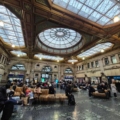
Milano Centrale is the main departure station for high-speed trains to Venice, including most Frecciarossa and Italo services. It’s one of Europe’s largest and most architecturally impressive stations, with a wide range of shops, cafés, restaurants, and services.
Key Features:
- Major hub with 36 platforms
- Direct departures to Venezia Santa Lucia and Venezia Mestre
- Served by Frecciarossa, Italo, Intercity, and Regionale services
- FRECCIALounge and Italo Club lounges for premium passengers
- Extensive shopping, restaurants, currency exchange & luggage storage
- Well-connected to Milan Metro (Lines M2 & M3)
Why Start Here?
Most frequent departures • Best facilities • Easiest for long-distance travelers
2. Milano Porta Garibaldi (Secondary Departure Station)
Porta Garibaldi is Milan’s second major hub, located in the modern Porta Nuova district. A small number of Italo and Trenord services to Venice may start or pass through here.
Key Features:
- Served mainly by Italo and regional connections
- Convenient for travelers staying near Isola or modern business districts
- Metro access to Lines M2 and M5
- Lighter crowds compared to Centrale
Why Start Here?
Ideal if your accommodation is in the north-west or business districts of Milan
3. Milano Rogoredo (Alternative High-Speed Stop)
Milano Rogoredo is increasingly used by Italo and some Frecciarossa trains as a secondary high-speed station. Many of the most affordable promo fares appear from this station.
Key Features:
- Frequently used by Italo for budget-friendly departures
- Served by some Frecciarossa services
- Less crowded than Centrale
- Metro Line M3 connects to the city center
- Good for travelers coming from southern Milan or Linate Airport area
Why Start Here?
Often cheaper fares, easy access, quicker boarding experience
Quick Comparison Table — Milan Departure Stations
| Station | Main Operators | Facilities | Best For | Metro Access |
|---|---|---|---|---|
| Milano Centrale | Frecciarossa, Italo, Regionale, Intercity | ⭐⭐⭐⭐⭐ Shopping, lounges, dining, luggage storage | Most travelers, tourists, long-distance connections | M2, M3 |
| Milano Porta Garibaldi | Italo, Trenord, some Regionale | ⭐⭐⭐ Modern facilities, calmer crowds | Travelers staying near Isola/Porta Nuova | M2, M5 |
| Milano Rogoredo | Italo, Frecciarossa | ⭐⭐ Basic but efficient | Budget fares, travelers from south Milan/Linate area | M3 |
Each station is well connected and easy to reach, but Milano Centrale remains the most common and convenient starting point for the train from Milan to Venice. If you’re looking for cheaper tickets or lighter crowds, Rogoredo can be a smart choice, especially on Italo services.
Arrival Stations in Venice (Santa Lucia + Mestre)
When you travel from Milan to Venice by train, you will arrive at one of two major stations: Venezia Santa Lucia or Venezia Mestre. Both are important gateways to Venice, but they serve very different purposes. Knowing the difference will help you plan your arrival, onward connections, and accommodation.
1. Venezia Santa Lucia (Main Station — Inside the Lagoon)
This is the most iconic arrival point for any traveler coming to Venice. Situated directly in the historic center, Venezia Santa Lucia places you right at the edge of the Grand Canal, offering a picture-perfect arrival unlike any other station in Europe.
What Makes Santa Lucia Special?
- Located inside the lagoon, steps from canals, bridges, and water taxis
- Best for tourists staying in San Marco, Cannaregio, Rialto, Santa Croce, or Dorsoduro
- No cars or taxis — only vaporetti (water buses), water taxis & walking
- Direct access to ACTV Water Bus Lines 1, 2, N, and many lagoon routes
- Surrounded by cafés, hotels, and luggage storage facilities
- Scenic arrival as trains cross the Ponte della Libertà over the water
If your hotel or Airbnb is in the historic center, always choose a train that goes directly to Venezia Santa Lucia — it saves extra transfers and makes arrival incredibly convenient.
2. Venezia Mestre (Mainland Station — Cheaper Accommodations)
Venezia Mestre sits on the mainland, just before the lagoon. Many trains terminate here, while others continue onward to Santa Lucia. It’s a large, well-connected station ideal for budget travelers or those staying outside the historical center.
Why Arrive at Mestre?
- Great for hotels near the mainland (often cheaper and more spacious)
- Excellent access to buses, trams, taxis, and shuttles
- 2–10 minutes by train to Santa Lucia
- Many Regionale and Intercity services stop here
- Easier for travelers with large luggage or cars
If you’re planning day trips around Veneto—like Verona, Padova, or Treviso—Mestre offers a more convenient base with better transport options and lower accommodation prices.
Quick Comparison Table — Venice Arrival Stations
| Station | Location | Best For | Transport Options | Travel Time from Milan |
|---|---|---|---|---|
| Venezia Santa Lucia | Inside the lagoon (historic center) | Tourists staying in Venice, walking access to canals | Water buses, water taxis, walking | 2h–2h30m |
| Venezia Mestre | Mainland, before the lagoon | Budget stays, regional travel, easy connections | Buses, trams, trains | 2h–2h20m |
Which Station Should You Choose?
- Choose Santa Lucia → If you want the authentic Venice experience from the moment you arrive.
- Choose Mestre → If you want affordability, convenience, or are planning multiple day trips.
Both stations are safe, efficient, and well-connected — the best choice depends on where you’re staying and how you plan to explore Venice.
Milan → Venice: Train vs Bus vs Flight
Travelers going from Milan to Venice can choose between train, bus, or flight, but the experience varies greatly. Across all three competitors, the most consistent recommendation is clear: the train is the fastest, most comfortable, and most convenient way to travel between Milan and Venice.
Trains offer high-speed travel, direct services, scenic views (Lake Garda + Venetian Lagoon), frequent departures, and effortless arrivals right in the heart of Venice.
Buses are the most budget-friendly option but take longer and arrive outside the lagoon.
Flights are not practical, as the distance is short, and airport transfers take more time than the flight itself.
Below is a full breakdown of how each option compares.
Train: The Most Popular & Convenient Option
High-speed trains like Frecciarossa and Italo take you from Milan to Venice in as little as 2 hours, with departures throughout the day. Trains arrive directly at Venezia Santa Lucia, putting you at the edge of the Grand Canal — something no other mode of transport offers.
Why Choose Train?
- Fastest total journey time
- No airport transfers or security queues
- Comfortable seating, Wi-Fi, power, luggage included
- Directly arrives in Venice (Santa Lucia or Mestre)
- Eco-friendly & scenic
Trains easily win for overall convenience and travel experience.
Bus: Cheapest Option but Slowest
Buses from Milan to Venice (FlixBus, Itabus) are extremely cheap — sometimes as low as €5. However, journey times are 3.5 to 5 hours, and buses arrive at Venice Tronchetto or Mestre, requiring an additional transfer to reach the historic center.
Why Choose Bus?
- Lowest ticket prices
- Good for budget travelers
- Frequent daily departures
However, they can be delayed by motorway traffic, especially on weekends.
Flights: Not Recommended
Milan and Venice are too close for flights to make sense. By the time you travel to the airport, check in, and fly, the total travel time becomes much longer than taking the train.
Why Avoid Flights?
- Long security & boarding times
- Airport transfers in both cities
- Usually the most expensive option
- Not environmentally friendly
Flights only make sense if they are part of an international connection
Milan → Venice Transport Comparison Table
| Mode | Total Travel Time | Price Range | Frequency | Comfort | Luggage Policy | Best For |
|---|---|---|---|---|---|---|
| Train (Frecciarossa, Italo, Regionale) | 2h–3h30m | €14.90–€55+ | 30+ trains/day | ⭐⭐⭐⭐⭐ High | Free, no weight limit | Fastest, best arrival, most convenient |
| Bus (FlixBus, Itabus) | 3h30m–5h | €5–€15 | 10–15/day | ⭐⭐⭐ Basic | Free luggage allowance | Budget travelers |
| Flight (MXP/LIN → VCE) | 4h–6h+ total | €60–€150+ | Few daily | ⭐⭐⭐ Comfortable but slow | Airline limits apply | Only for connecting flights |
Final Verdict
- Best Overall: Train → Fastest, easiest, most scenic
- Cheapest: Bus → If price is the only priority
- Not Recommended: Flight → Too slow & complicated for short distances
The train clearly offers the most balanced combination of speed, comfort, and direct arrival.
FAQs: Milan → Venice Train
1. How long is the train from Milan to Venice?
The average journey takes 2h 15m to 3h 12m, depending on the service. The fastest Frecciarossa trains complete the route in 2h 13m.
2. How far is Milan from Venice by train?
The distance is about 245 km (152 miles) between the two cities.
3. Are there direct trains from Milan to Venice?
Yes, both Frecciarossa and Italo operate frequent direct trains from Milan Centrale to Venice Santa Lucia and Venice Mestre.
4. How much is a train ticket from Milan to Venice?
Ticket prices start from €14.90 when booked in advance. Last-minute fares typically range between €25–€55+ depending on class and operator.
5. How many trains run from Milan to Venice each day?
There are around 30–56 trains per day, depending on the date and timetable adjustments.
6. What time is the first train from Milan to Venice?
The first high-speed train usually departs around 05:45.
7. What time does the last train leave from Milan to Venice?
The last departures are generally between 20:45–23:00, depending on the operator.
8. What companies operate trains from Milan to Venice?
Major operators include Frecciarossa (Trenitalia), Italo, and regional Regionale services.
9. Is the train from Milan to Venice a high-speed train?
Yes, Frecciarossa and Italo offer high-speed services capable of reaching 300 km/h, completing the journey in just over 2 hours.
10. Do trains from Milan to Venice stop at Venice Mestre?
Yes, most trains stop at Venezia Mestre before continuing to Venezia Santa Lucia.
11. Which Milan stations do trains to Venice depart from?
Trains leave mainly from Milan Centrale, with some services from Milan Porta Garibaldi and Milan Rogoredo.
12. Do I need seat reservations for the Milan to Venice train?
Yes, high-speed trains require mandatory seat reservations, while Regionale services do not.
13. How far in advance should I book Milan–Venice tickets?
The best prices appear 60–90 days before travel. Booking earlier generally means cheaper fares.
14. Can I take luggage on the train?
Yes, luggage is free, and there are no weight limits. Space varies by train type.
15. Is the Milan to Venice train scenic?
Yes. Highlights include Lake Garda views and the approach across the Venetian Lagoon.
16. Can I travel from Milan airports directly to Venice by train?
Yes. From Malpensa Airport, you can take a train to Milan Centrale and then connect to Venice. Direct airport-to-Venice trains are not available.
17. Are pets allowed on Milan to Venice trains?
Yes. Small pets travel free in carriers, while larger dogs require a small fee on most operators.
18. Can I take a bike on the train?
Foldable or disassembled bikes are allowed on high-speed trains. Regional trains often allow full-size bikes, depending on the route.
Conclusion: Why Travel by Train from Milan to Venice?
Travelling from Milan to Venice by train is one of the most convenient and enjoyable ways to cross northern Italy. With fast journey times, comfortable trains, and frequent departures throughout the day, it’s a route designed for both commuters and travellers exploring Italy’s most iconic destinations. High-speed Frecciarossa and Italo trains cover the distance in just over two hours, giving you a smooth, stress-free travel experience without the airport hassle or long motorway drives.
The moment you leave Milan, the route unfolds through a series of charming Italian cities—Brescia, Verona, Vicenza, and Padua—before the train glides across the Venetian Lagoon into Venice Santa Lucia, one of the most scenic rail arrivals in Europe. With no baggage fees, generous luggage allowances, free Wi-Fi on many services, and onboard amenities such as food bars, power sockets, and comfortable seating, the train journey becomes part of the adventure.
It’s also one of the best-value routes in Italy. With advance fares starting from around €14.90, and up to 50+ trains running daily, travellers can easily choose the departure time and service class that best fits their schedule and budget. Direct trains, no hidden fees, seamless station access, and city-centre arrivals make the entire trip efficient and enjoyable from start to finish.
Whether you’re planning a day trip, a weekend getaway, or connecting Venice with a broader Italy itinerary, the train is the fastest, simplest, and most scenic way to travel. From comfort and flexibility to affordability and unforgettable views, the Milan → Venice train journey offers everything you need for a perfect start to your visit to La Serenissima.